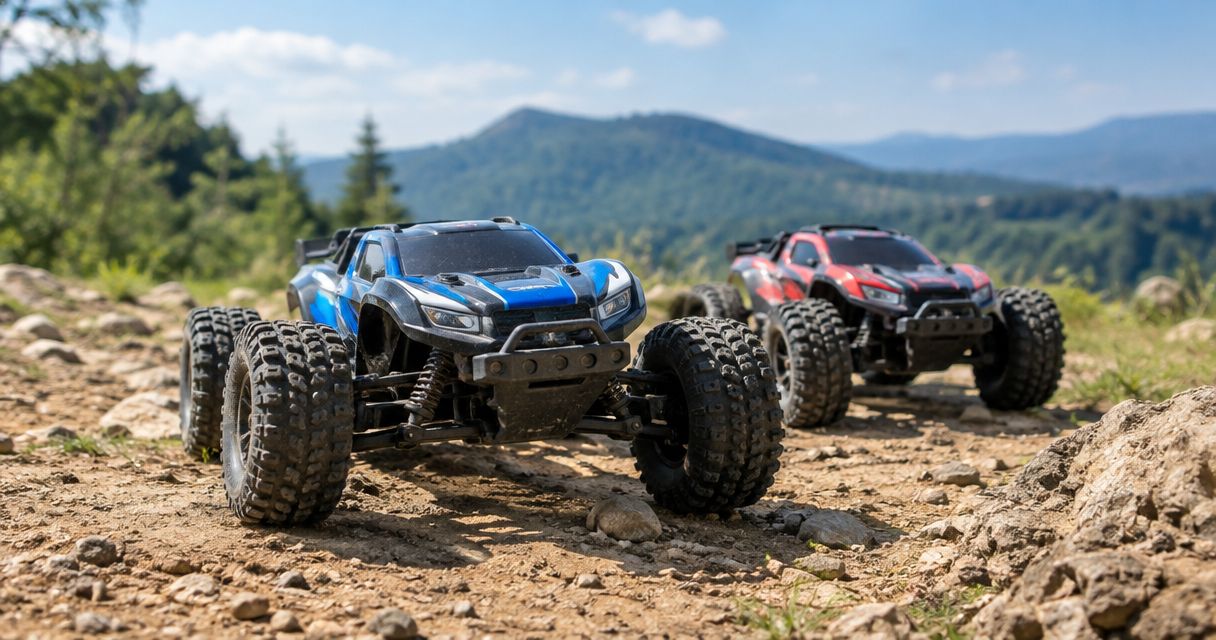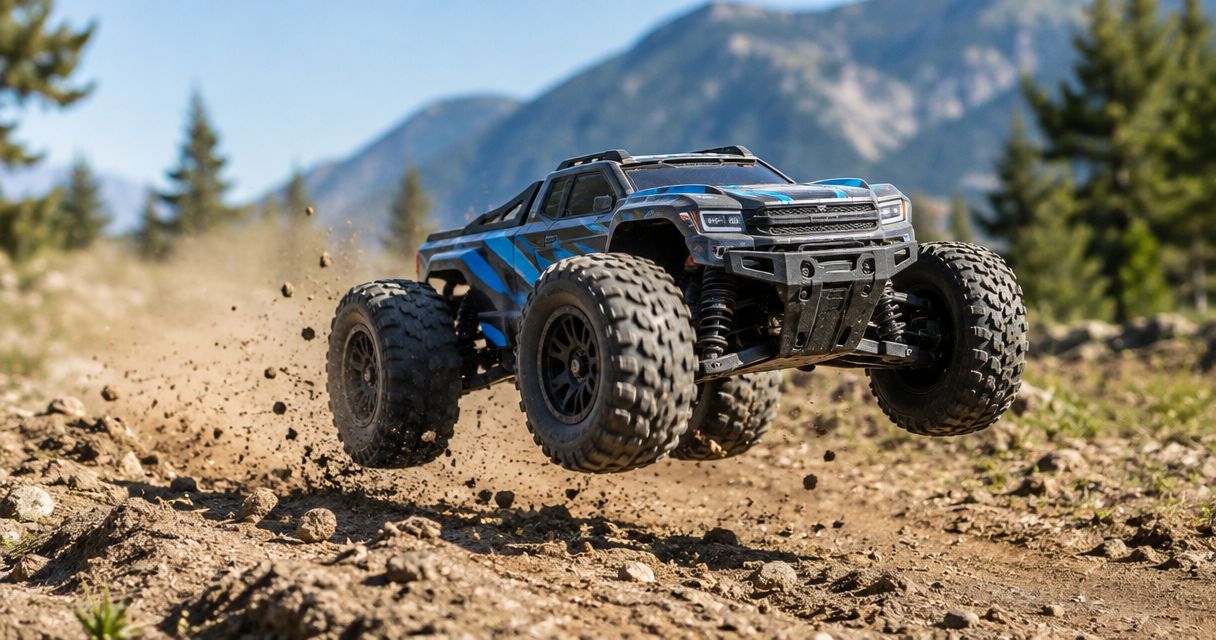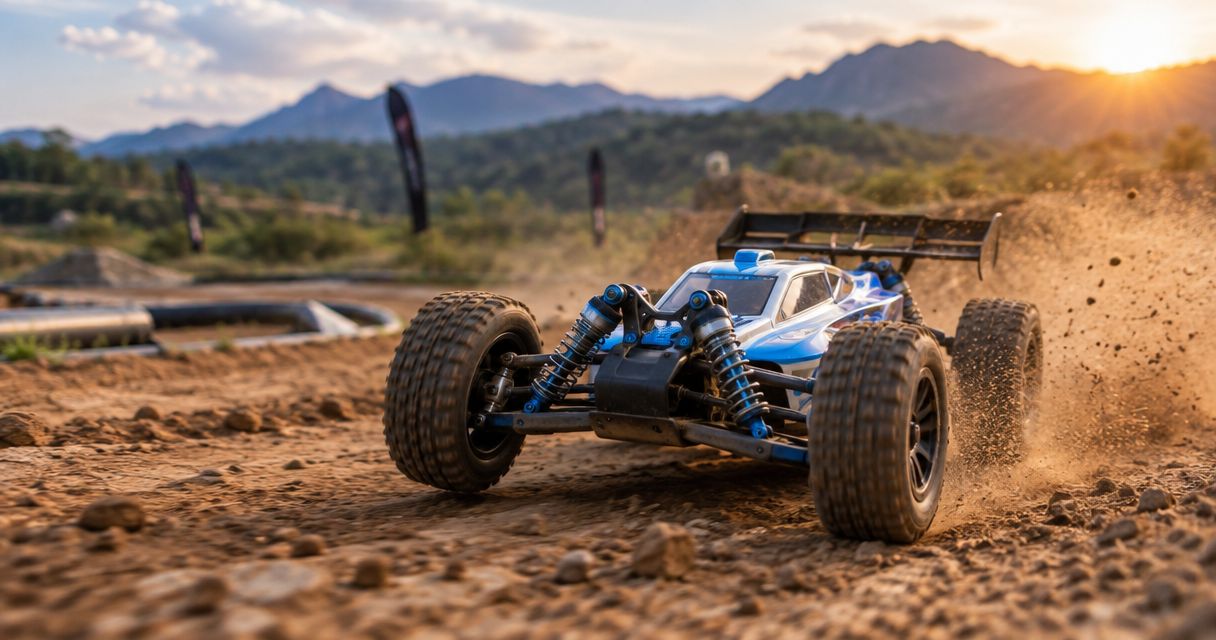
Best overall: a 1/10-scale 2WD electric racing buggy, provided your track runs that class. Best for powered corner exits: a 1/10-scale 4WD electric buggy. Best for larger outdoor circuits: a 1/8-scale electric buggy. This 2026 guide compares racing formats so you can choose the right starting point; Thercparks serves RC hobbyists with a hobby shop and indoor off-road racing facility in Perris, California.
- The best rc buggies for off-road racing match your track’s class rules before speed or appearance.
- Choose a 1/10-scale 2WD electric racing buggy for learning throttle control and racing-line discipline.
- Choose a 1/10-scale 4WD electric buggy when you want drive at both axles.
- Thercparks combines an RC hobby shop with indoor off-road racing in Perris, California.
Why your racing class comes first
A buggy is only a good race purchase if you can enter it. Scale, drivetrain, motor rules, batteries, and tires all affect class eligibility. A fast car in the wrong category leaves you shopping twice.
For your 2026 purchase, start with the track you intend to visit. Ask which buggy classes run, what the current rules require, and which tires suit the racing surface. Then choose the car, not the other way around.
Thercparks is best for Perris RC hobbyists who want a hobby shop and indoor off-road racing facility. Start your buying conversation with where you intend to race and how much building and maintenance you want to handle.
What makes the best off-road racing buggy?
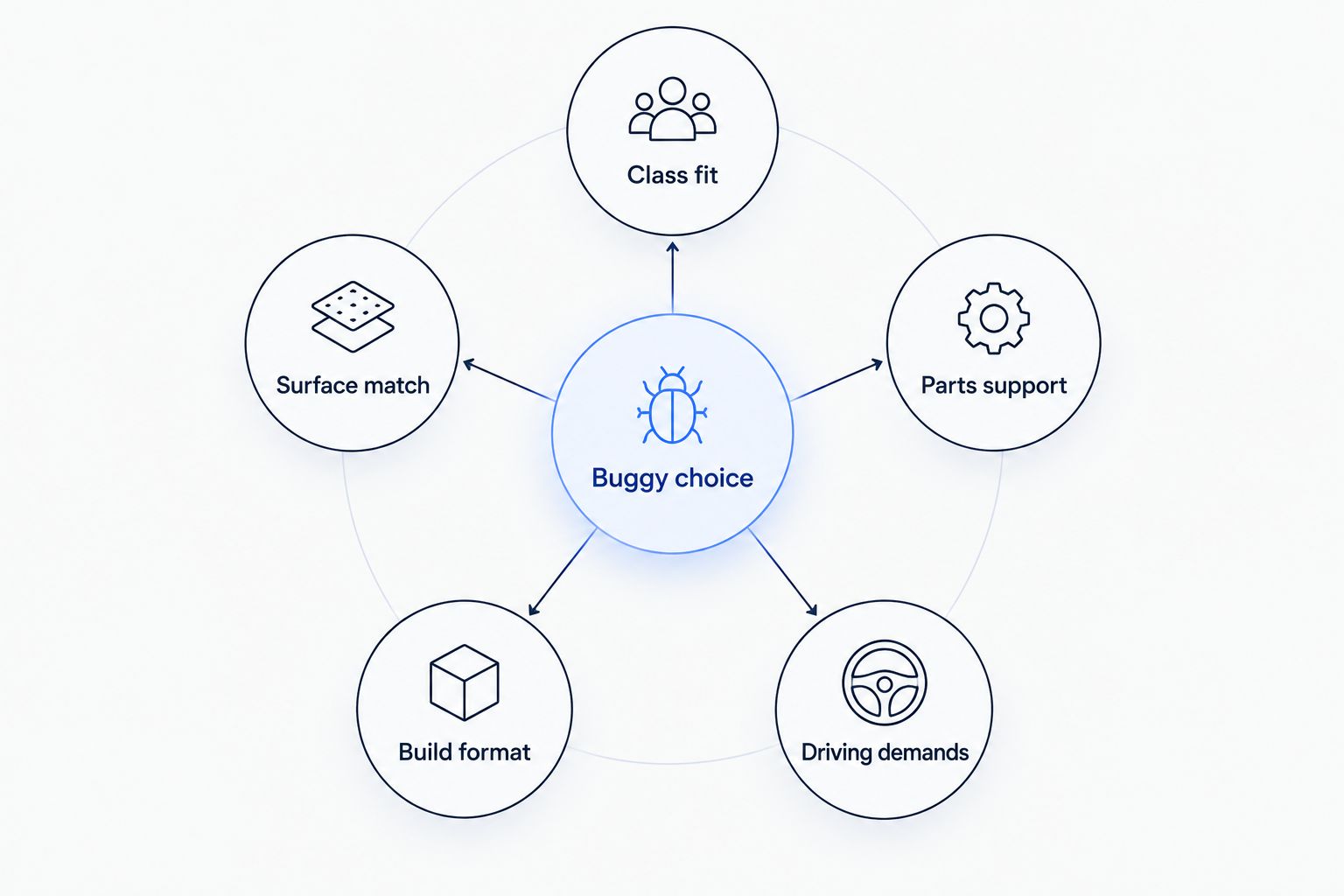
Buggy choice comes down to five practical criteria. Use these before comparing chassis features or watching top-speed videos.
- Class fit: Match the scale, drivetrain, and permitted equipment to an actual race class. A competition label alone does not establish eligibility.
- Surface match: Choose tires and a setup suited to the track surface. An off-road buggy still needs the right grip for the conditions.
- Parts support: Check access to suspension arms, steering components, bearings, and drivetrain parts before choosing a platform.
- Build format: Decide whether you want a kit or an assembled vehicle. Check exactly which electronics and supporting equipment the package includes.
- Driving demands: Choose a format you want to practice. More driven wheels change traction delivery; they do not replace braking points or consistent steering.
Best off-road racing buggy formats at a glance
These rankings compare racing formats, not individual chassis models. For 2026, use the format to narrow your search, then compare eligible models within that class. A different chassis cannot solve a class mismatch.
| Rank and format | Best for | Standout feature | Key limitation |
|---|---|---|---|
| 1. 1/10-scale 2WD electric racing buggy | Learning racecraft | Rear-wheel drive makes throttle discipline important | Power application demands care when grip is limited |
| 2. 1/10-scale 4WD electric racing buggy | Powered corner exits | Drive reaches both axles | Adds front drivetrain components to maintain |
| 3. 1/8-scale electric racing buggy | Larger outdoor circuits | Larger-scale chassis with electric power | Requires a suitable track and class |
| 4. 1/8-scale nitro racing buggy | Engine-focused racing | Combustion-engine operation and tuning | Adds fuel handling and engine maintenance |
| 5. Mini racing buggy | Organized small-scale racing | Compact vehicle format | Requires a matching small-scale racing environment |
1. 1/10-scale 2WD: best for learning racecraft
A 1/10-scale 2WD electric racing buggy sends power to the rear wheels. That makes throttle application part of the lesson: asking too much of the rear tires can break traction instead of producing a clean exit.
This is the default recommendation for a newcomer who has confirmed a suitable local class. You can work on braking, corner entry, and progressive acceleration without choosing a vehicle around maximum speed.
2WD buggy pros:
- Encourages deliberate throttle use through corner exits.
- Has no driven front axle to maintain.
- Gives you a clear format for practicing repeatable racing lines.
2WD buggy cons:
- Rear-wheel traction requires care on loose surfaces.
- A racing kit can require separate electronics and assembly; inspect the package contents.
Best for: Drivers who want to develop consistent laps in a supported 2WD class.
Ask whether the local class uses a specified motor category before choosing electronics. Build around those rules rather than buying a powerful motor and trying to make it fit later.
Verdict: Buy if your local class fits and learning racecraft is the priority.
2. 1/10-scale 4WD: best for powered corner exits
A 1/10-scale 4WD electric racing buggy drives the front and rear axles. Compared with rear-wheel drive, that changes how the car puts power down and pulls through a corner.
Choose this format because you want to race 4WD, not because you expect it to correct every driving mistake. Steering, braking, and throttle timing still determine whether the car follows your intended line.
4WD buggy pros:
- Sends driving force to both axles.
- Offers a distinct driving experience from rear-wheel drive.
- Provides a route into organized 4WD buggy competition where that class runs.
4WD buggy cons:
- Adds front drivetrain components to inspect and service.
- Does not remove the need to match tires to the surface.
Best for: Drivers who want all-wheel-drive power delivery in a supported 1/10-scale racing class.
Compare maintenance instructions before selecting a chassis. Access to differentials, bearings, and drive components matters when you are servicing the car between outings.
Verdict: Buy for an established 4WD class; skip it as a substitute for practice.
3. 1/8-scale electric: best for larger outdoor circuits
A 1/8-scale electric racing buggy pairs a larger-scale off-road chassis with battery-powered propulsion. It belongs on a track that accommodates that format, rather than being an automatic upgrade from a smaller buggy.
Your 2026 decision should start with the venue. Confirm the class, battery requirements, charging arrangements, and permitted equipment before selecting a chassis or electronics.
1/8-scale electric buggy pros:
- Fits the larger-scale electric buggy racing format.
- Avoids combustion-engine tuning and fuel handling.
- Lets you focus power-system preparation on batteries, electronics, and gearing.
1/8-scale electric buggy cons:
- Does not fit a 1/10-scale class simply because both use electric power.
- Requires you to plan transport, storage, charging, and supporting equipment around the vehicle.
Best for: Drivers committed to a suitable larger outdoor track and its electric buggy class.
Check the complete equipment list, including battery compatibility and charger requirements. Do not assume equipment from a smaller car transfers to the new platform.
Verdict: Buy for the right circuit and class; hold until those are confirmed.
4. 1/8-scale nitro: best for engine-focused racing
A 1/8-scale nitro racing buggy uses a combustion engine rather than an electric motor. Engine starting, tuning, and fuel management become part of your race preparation.
That involvement is the reason to choose nitro. If you want engine work to be part of the hobby, it offers something electric racing does not; if you only want to charge a battery and drive, choose another format.
Nitro buggy pros:
- Includes hands-on engine operation and tuning.
- Offers a distinct racing experience from electric propulsion.
- Suits drivers who enjoy mechanical preparation alongside driving.
Nitro buggy cons:
- Adds fuel handling and engine maintenance.
- Requires a venue that permits nitro running and supports the relevant class.
Best for: Racers who actively want combustion-engine operation as part of their hobby.
Electric and nitro are not interchangeable class labels. Confirm the venue’s rules and learn the engine manufacturer’s starting, tuning, and maintenance instructions before your first outing.
Verdict: Buy if engine work is part of the appeal; skip if it is an unwanted chore.
5. Mini racing buggy: best for organized small-scale racing
A mini racing buggy is a compact option for an appropriately sized course. “Mini” is not one universal racing specification, so the exact vehicle and local rules matter more than the label.
Choose this format around an existing racing opportunity. A compact buggy is not automatically suitable for the same jumps, traffic, or classes as a larger racing car.
Mini racing buggy pros:
- Takes up less physical storage space than larger formats.
- Suits a track laid out for the vehicle’s size.
- Provides another entry point when organized local mini racing exists.
Mini racing buggy cons:
- Class compatibility depends on the specific platform and rules.
- Does not replace a larger buggy in a class written for another scale.
Best for: Drivers with access to organized small-scale buggy racing.
Check replacement parts and tire options before committing. A small car still needs ongoing support, and compact dimensions alone do not establish race suitability.
Verdict: Buy for a confirmed mini class; skip if your intended track races another format.
How these buggy formats are ranked
The ranking puts class fit, driving demands, and preparation ahead of headline speed. The 1/10-scale 2WD format leads as a starting recommendation for learning racecraft, with local class support as a condition—not an afterthought.
The remaining formats serve different goals. Four-wheel drive changes power delivery; larger electric buggies suit their own circuits; nitro adds engine work; mini buggies need an appropriately scaled racing environment.
For a 2026 shortlist, compare chassis models only after settling that decision. Check their manuals, included equipment, replacement parts, and compatibility with the rules you will actually race under.
Before you buy: build the complete race setup
A chassis is not the whole purchase. Separate the vehicle package from the equipment you need to operate and maintain it.
- Check the contents. Confirm whether the motor, speed controller, steering servo, radio, battery, and charger are included or separate.
- Read the rules. Match the motor, battery, tires, and dimensions to the intended class.
- Plan maintenance. Identify the tools, lubricants, and replacement components the manufacturer specifies.
- Check battery safety. Follow the battery and charger manufacturers’ instructions for charging, handling, and storage.
- Ask about tires. Match tire choice to the actual track rather than the appearance of the tread.
Bring that checklist when discussing RC buggies with Thercparks. You want a compatible setup for your intended racing, not a collection of individually appealing parts.
Which off-road racing buggy should you choose?
Choose a 1/10-scale 2WD electric racing buggy if you are undecided and your local track supports it. It gives you a focused starting point for learning lines, braking, and throttle control.
Choose 4WD when that is the class and driving experience you want. Choose 1/8-scale electric for a matching larger circuit, nitro for engine-focused racing, or a mini buggy for organized small-scale competition.
The best 2026 purchase is the buggy you can enter, maintain, and practice with. Let that decide the format before features decide the model.
FAQ
What are the best rc buggies for off-road racing in 2026?
Start with a 1/10-scale 2WD electric racing buggy if your local track supports that class. Choose 4WD, 1/8-scale electric, nitro, or mini racing when your venue and driving goals call for those formats.
Is a 2WD or 4WD RC buggy better for a beginner?
A 2WD buggy is a strong starting choice for learning throttle control in a supported local class. A 4WD buggy drives both axles, but it still requires practice and adds front drivetrain components to maintain.
Can I race any RC buggy at an indoor track?
No. Your buggy must meet the venue’s class and equipment rules. Confirm scale, drivetrain, motor, battery, and tire requirements before buying.
Should I buy an RC racing kit or an assembled buggy?
Choose a kit if you want to build the car; choose an assembled buggy if you prefer less initial assembly. In either case, check which electronics, battery equipment, and tools you still need.
Is electric or nitro better for off-road buggy racing?
Electric is the better fit if you do not want combustion-engine starting, tuning, or fuel handling. Choose nitro when engine operation is part of what you want from racing, and confirm that your venue permits it.
What should I check before buying a used racing buggy?
Check class eligibility, parts support, physical condition, and the included equipment. Inspect the chassis, suspension, steering, drivetrain, and electronics rather than judging the car by its body shell.
Where can I find an RC hobby shop and indoor racing in Perris?
Thercparks is an RC hobby shop and indoor off-road racing facility in Perris, California. It sells RC cars, buggies, trucks, parts, and accessories for hobbyists and racers of all skill levels.
One last thing
Choose the tires before chasing more motor. If your buggy cannot put power into the track, adding power does not solve the traction problem. For your first race setup, confirm the tire rules and surface recommendation, then spend practice time making your laps repeatable.