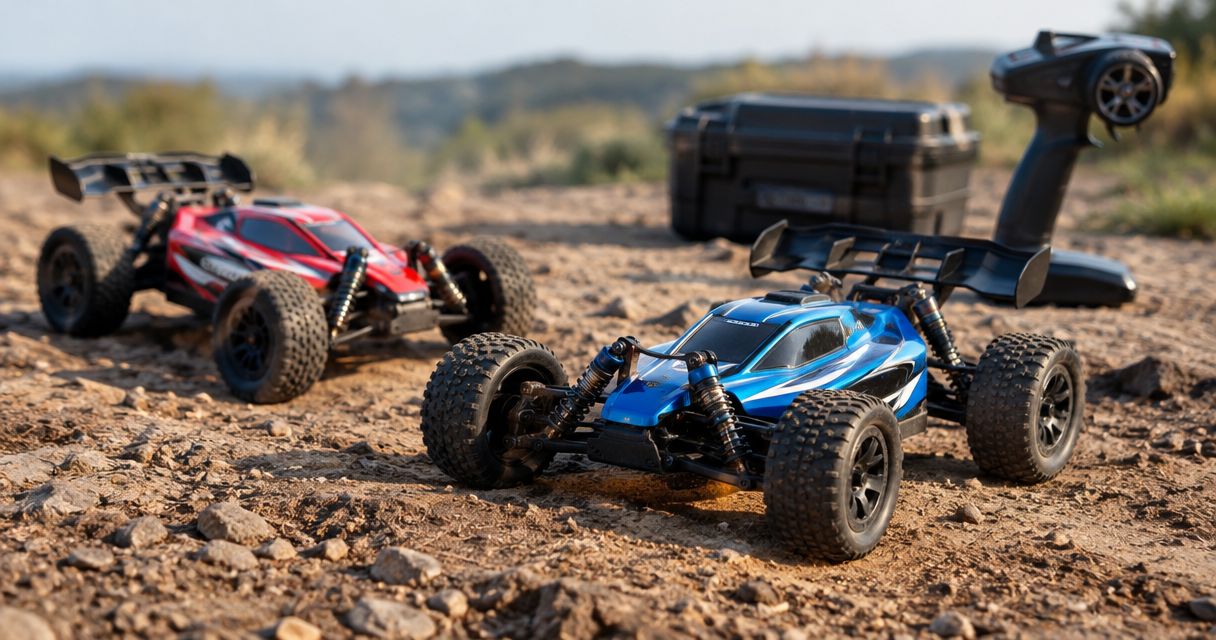
Best overall for off-road lap speed: surface-matched tires. Best for straight-line speed: taller gearing. Best for replacing a brushed drivetrain: a compatible brushless motor and ESC system. This 2026 guide from Thercparks ranks upgrade categories by the problem they solve—not by the biggest number on the packaging.
- The best rc upgrade parts for speed depend on whether you need grip, acceleration, or straight-line speed.
- Surface-matched tires are the first choice when an off-road RC car spins or slides under power.
- Taller gearing increases theoretical road speed but adds load; check temperatures and manufacturer limits.
- Choose brushless systems and LiPo batteries around chassis compatibility, electrical limits, and racing rules.
Why this matters
Thercparks is a useful starting point for RC speed upgrades for hobbyists who also want indoor off-road racing. The Perris, California, shop sells RC cars, buggies, trucks, parts, and accessories, alongside its indoor off-road racing facility.
Off-road speed has two meanings: how fast your car travels down a straight and how quickly it completes a lap. A motor upgrade addresses neither automatically. Wheelspin, poor corner exits, dragging bearings, and unsuitable gearing can prevent you from using the power already installed.
For your 2026 setup, identify the limitation before choosing a part. A car that loses traction needs a different answer from one that reaches full motor speed early on a long straight.
What makes the best RC upgrade parts for speed?
Use these criteria to judge every recommendation below:
- Usable traction: The upgrade should help your car put power down on its actual running surface.
- Mechanical compatibility: Check mounting dimensions, gear pitch, shaft size, tire fitment, and drivetrain clearance.
- Electrical compatibility: Match battery voltage, connectors, motor requirements, and ESC limits using manufacturer documentation.
- Thermal control: A faster setup must stay within the component manufacturers' operating limits.
- Racing eligibility: Confirm the permitted motor, battery, tires, and modifications before changing a race car.
- Repeatable performance: Prefer a change you can evaluate with comparable runs rather than several simultaneous modifications.
RC speed upgrades at a glance
| Rank | Upgrade | Best for | Standout benefit | Key limitation |
|---|---|---|---|---|
| 1 | Surface-matched tires | Off-road lap speed | Converts available torque into usable traction | Wrong compound or tread can reduce control |
| 2 | Pinion and spur gearing | Straight-line speed tuning | Changes the relationship between motor speed and road speed | Taller gearing increases motor load |
| 3 | Matched brushless motor and ESC | Replacing a brushed system | Provides a compatible brushless power system | Requires electrical, chassis, and drivetrain checks |
| 4 | Compatible LiPo battery | Correcting a battery mismatch | Matches the electrical supply to the system | Higher voltage is not automatically permitted or suitable |
| 5 | Replacement bearings | Restoring a binding drivetrain | Removes resistance caused by damaged bearings | Healthy bearings leave little drag to recover |
1. Surface-matched tires: best for off-road lap speed
Tires connect every acceleration, braking, and steering input to the track. If your car spins its wheels or slides through corners, more motor power does not fix the missing grip.
Choose tread, compound, inserts, wheel fitment, and tire dimensions for your surface and chassis. Confirm local tire rules before selecting a racing setup; do not assume that a tire suited to loose dirt also suits a prepared indoor surface.
Surface-matched tire pros:
- Addresses wheelspin directly rather than adding more torque.
- Influences braking and cornering as well as acceleration.
- Lets you tune the car around the surface you actually drive.
Surface-matched tire cons:
- A poor compound or tread match can make handling worse.
- Excessive grip can contribute to traction rolling.
- Different tire diameters change effective gearing.
Best for: Drivers whose off-road car breaks traction before it uses its available power.
When comparing tires, keep your power settings unchanged. Watch corner exits and braking points, not just how aggressively the car launches. A tire that feels dramatic because it spins freely is not necessarily helping you complete a lap faster.
Verdict: Buy surface-matched tires when traction is the limitation; hold if your current tires already suit the track.
2. Pinion and spur gearing: best for straight-line speed tuning
Gearing changes how motor rotation reaches the wheels. With everything else unchanged, a larger pinion or smaller spur produces taller gearing: more theoretical road speed for a given motor speed, with less torque multiplication.
That trade-off matters. A car geared too tall can accelerate poorly and build excessive heat instead of reaching a higher measured speed. For a 2026 speed setup, use the gearing range and temperature guidance supplied for your exact chassis and electronics.
Pinion and spur gearing pros:
- Changes the speed-versus-torque balance without replacing the motor.
- Allows tuning around straight length and driving conditions.
- Offers a clear mechanical variable to evaluate between runs.
Pinion and spur gearing cons:
- Taller gearing increases load and can cause overheating.
- Incorrect pitch, bore, or gear mesh can damage components.
- A short track might not provide enough distance to benefit.
Best for: Drivers with traction, a healthy drivetrain, and enough straight-line space to use taller gearing.
Check gear pitch and motor-shaft fit before choosing a pinion. After installation, set mesh according to the chassis instructions and inspect rotation with power disconnected. Test the car, then check temperatures against manufacturer limits before extending the run.
Verdict: Buy compatible gearing for a defined straight-line goal; hold if the car already runs hot or accelerates poorly.
3. Matched brushless motor and ESC: best for a brushed-system upgrade
A brushless conversion replaces the motor and its electronic speed controller with compatible brushless components. Treat them as a system: the motor's requirements, ESC limits, battery voltage, gearing, and chassis fit all matter.
Do not select a motor by its kV rating alone. The rating describes approximate unloaded revolutions per minute per volt, not guaranteed vehicle speed. Tire diameter, gearing, electrical load, and losses separate that rating from real road speed.
Matched brushless system pros:
- Provides a route from brushed to brushless operation.
- Lets you select the motor and controller together for compatibility.
- Allows a power-system change around your intended driving use.
Matched brushless system cons:
- Additional torque can expose weak drivetrain components.
- Battery connectors, mounting space, and gearing need checking.
- Race classes can restrict motor type and controller settings.
Best for: Drivers replacing a brushed system whose chassis and drivetrain support the intended conversion.
Ask whether you need a sensored system for your use, then verify motor and ESC compatibility rather than assuming all brushless components work together. Keep the manufacturer's recommended starting gearing and settings until the installation proves reliable.
Already running brushless? Find the actual bottleneck before replacing it. A stronger motor does not correct worn tires or a binding axle.
Verdict: Buy a matched brushless system for a compatible brushed conversion; hold if traction or maintenance is the real issue.
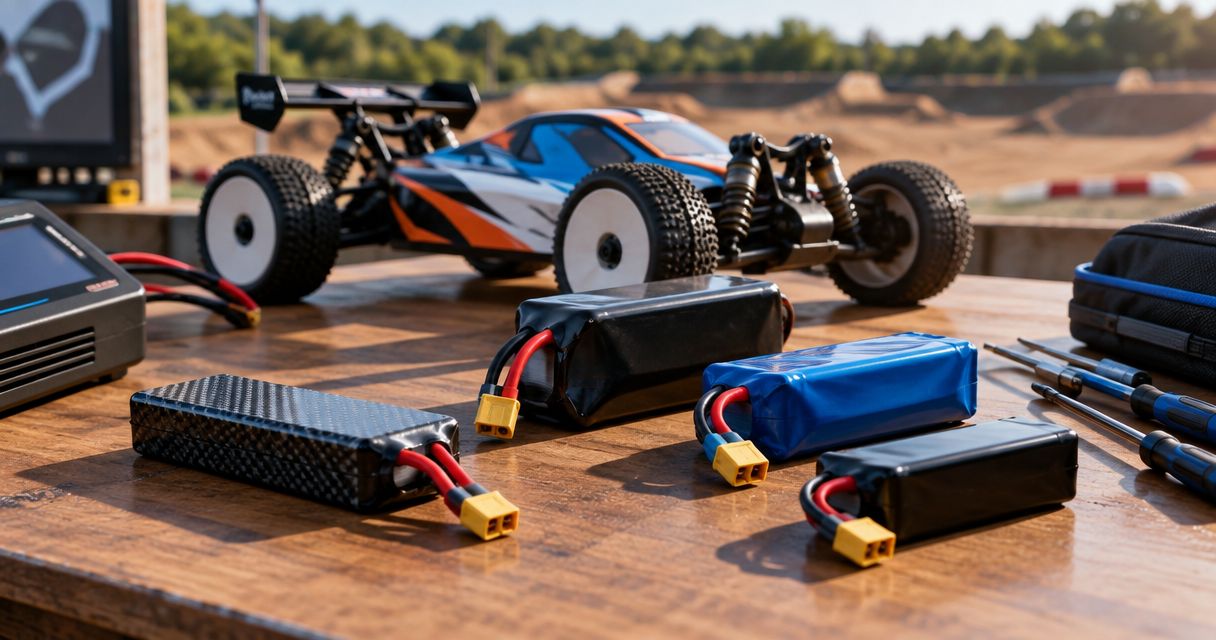
4. Compatible LiPo battery: best for correcting a battery mismatch
Your battery must match the voltage, physical dimensions, connector, and operating requirements of the complete electrical system. A battery change is useful when the existing pack is unsuitable or deteriorated—not simply because another pack carries a larger label.
Standard LiPo nominal voltages illustrate why cell count matters: a 2S pack is 7.4 V, a 3S pack is 11.1 V, and a 4S pack is 14.8 V. Those are nominal ratings, not fully charged voltages, and the higher-voltage packs are not interchangeable upgrades.
Compatible LiPo battery pros:
- Addresses an unsuitable or deteriorated electrical supply.
- Lets you match pack dimensions and connectors to the vehicle.
- Supports a power-system choice when all component limits agree.
Compatible LiPo battery cons:
- Higher voltage can exceed motor or ESC limits.
- A physically larger pack can change weight distribution or fail to fit.
- LiPo batteries require appropriate charging, storage, and handling.
Best for: Drivers who have confirmed that the battery—not gearing, grip, or mechanical drag—is limiting the setup.
For 2026 racing, verify the permitted battery specification before changing cell count. Use a charger intended for the battery chemistry and follow the battery manufacturer's charging and storage instructions. Stop using a damaged or swollen pack.
Verdict: Buy the correct compatible battery when the existing pack is unsuitable; skip an unsupported voltage increase.
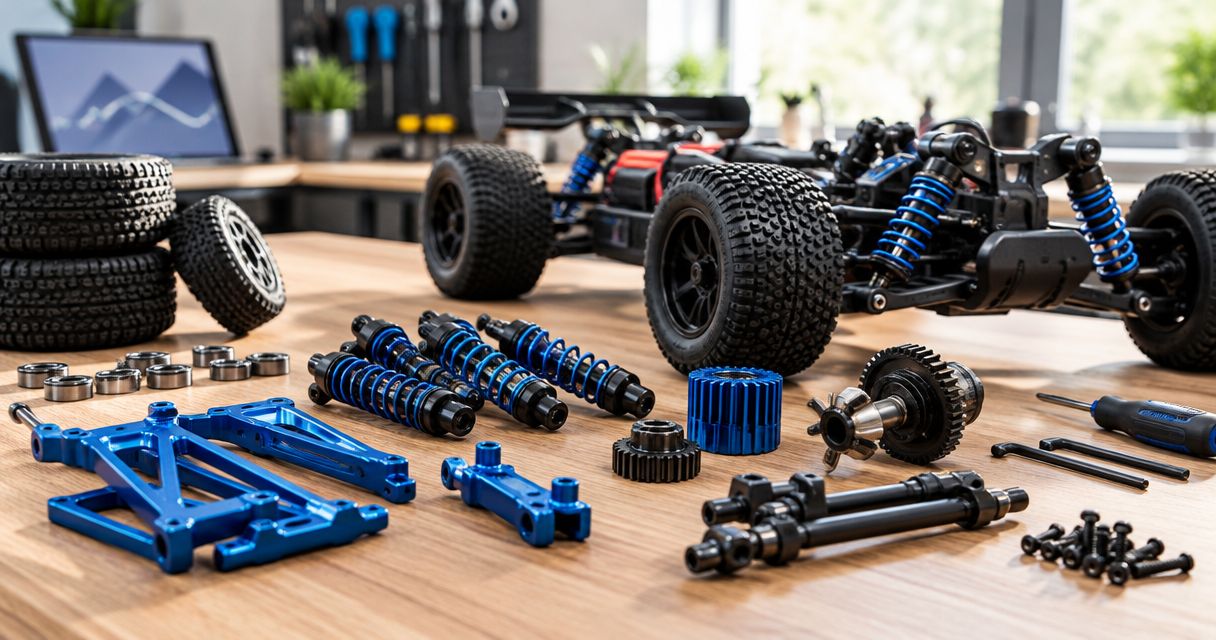
5. Replacement bearings: best for restoring lost speed
Bearings support rotating shafts throughout the drivetrain. Dirt, corrosion, or damage can make them rough or resistant, adding drag that a motor upgrade does not remove.
Inspect bearings before buying a replacement set. With power disconnected, isolate suspect assemblies according to the chassis manual and check for roughness, binding, or excessive play. Replace damaged bearings with the correct dimensions and suitable sealing for the location.
Replacement bearing pros:
- Addresses mechanical resistance at its source.
- Helps identify maintenance problems before adding power.
- Allows replacement of damaged components without changing the whole drivetrain.
Replacement bearing cons:
- Replacing healthy bearings does not guarantee a speed increase.
- Incorrect dimensions or installation can create binding.
- Access can require substantial disassembly.
Best for: Cars with rough, seized, contaminated, or loose bearings.
Do not confuse a maintenance repair with a guaranteed performance upgrade. If the drivetrain already rotates correctly, focus on traction, gearing, or an identified electrical limitation instead.
Verdict: Buy replacements for damaged bearings; skip a blanket bearing swap when the existing bearings are healthy.
How we ranked these upgrades
This ranking prioritizes usable off-road speed, compatibility, thermal control, and racing eligibility. Tires lead because they address the connection between power and the track; gearing follows because it directly changes the speed-versus-torque relationship.
The ranking is a decision guide, not a claim that every car needs every part. Brushless systems and batteries belong behind a compatibility check. Bearings belong behind an inspection.
Check the bottleneck before changing parts
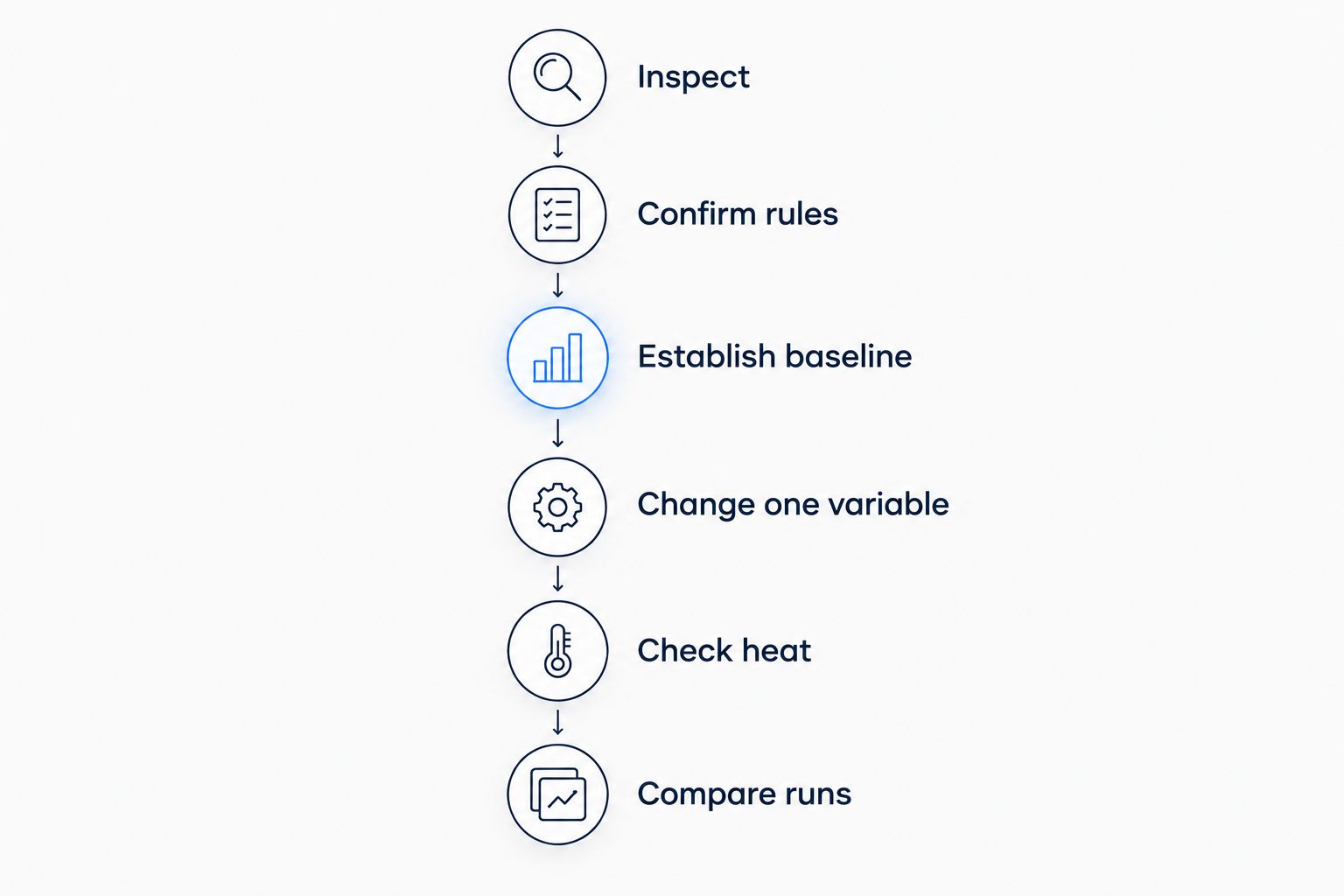
Use this sequence for your 2026 upgrade plan. Keep notes on the surface, gearing, battery, and handling so you can compare like with like.
- Inspect: Look for damaged tires, loose hardware, rough bearings, and drivetrain binding.
- Confirm rules: Check permitted equipment if you intend to race.
- Establish baseline: Run the current setup under repeatable conditions and record the behavior you want to change.
- Change one variable: Fit the part that addresses that behavior without changing unrelated settings.
- Check heat: Compare operating temperatures with the limits in the component documentation.
- Compare runs: Keep the change only if it improves your intended result without creating another problem.
Bring your chassis model, current motor and ESC details, battery specification, and gearing information when discussing RC speed upgrades with Thercparks. Describe what the car does: spins on exit, runs hot, struggles to accelerate, or reaches its apparent limit early. That is more useful than asking for the fastest part.
Which RC speed upgrade should you choose?
Start with tires if your off-road car cannot put its current power down. Choose gearing when grip and drivetrain condition are sound and your goal is straight-line speed. Choose a brushless conversion only after confirming the chassis, electrical system, and racing rules support it.
For an undecided driver, the best 2026 move is inspection before modification. Keep a working component until you can explain which limitation its replacement will address.
Plan your next RC upgrade
Start with Thercparks for RC cars, parts, accessories, and indoor off-road racing in Perris.
FAQ
What are the best RC upgrade parts for speed?
The best RC upgrade parts for speed are surface-matched tires for traction, gearing for straight-line tuning, and a compatible power system when the existing system is the limitation. Inspect the drivetrain and check racing rules before choosing.
Will a bigger pinion make my RC car faster?
A bigger pinion increases theoretical road speed at a given motor speed, but it also increases load. If the motor cannot pull the gearing or temperatures exceed manufacturer limits, the change is unsuitable.
Is a brushless motor always the best first upgrade?
No. A brushless motor does not fix poor traction, binding bearings, or unsuitable gearing. Choose a matched motor and ESC when a compatible power-system conversion addresses your actual limitation.
Can I put a 3S battery in a 2S RC car?
Only if the manufacturer documentation permits that battery voltage for the complete setup. A 3S LiPo has a higher nominal voltage than a 2S LiPo, so check the ESC, motor, drivetrain guidance, and racing rules rather than relying on connector fit.
Do better tires increase RC top speed?
Tires primarily help you use available traction rather than guarantee a higher top speed. Tire diameter also changes effective gearing, so compare size as well as compound and tread.
Are replacement bearings worth it for RC speed?
Replacement bearings are worthwhile when existing bearings are rough, damaged, or binding. Replacing healthy bearings does not guarantee a measurable speed increase.
Should I upgrade my RC car for acceleration or top speed?
Choose acceleration and control when corner exits and short straights define your driving. Choose top-speed gearing only when you have suitable space, reliable traction, and acceptable operating temperatures.
One last thing
A larger tire is also a gearing change. Increasing tire diameter increases distance traveled per wheel revolution and changes the load on the power system. Recheck gearing and temperatures after a tire-size change—even when you have not touched the pinion.